
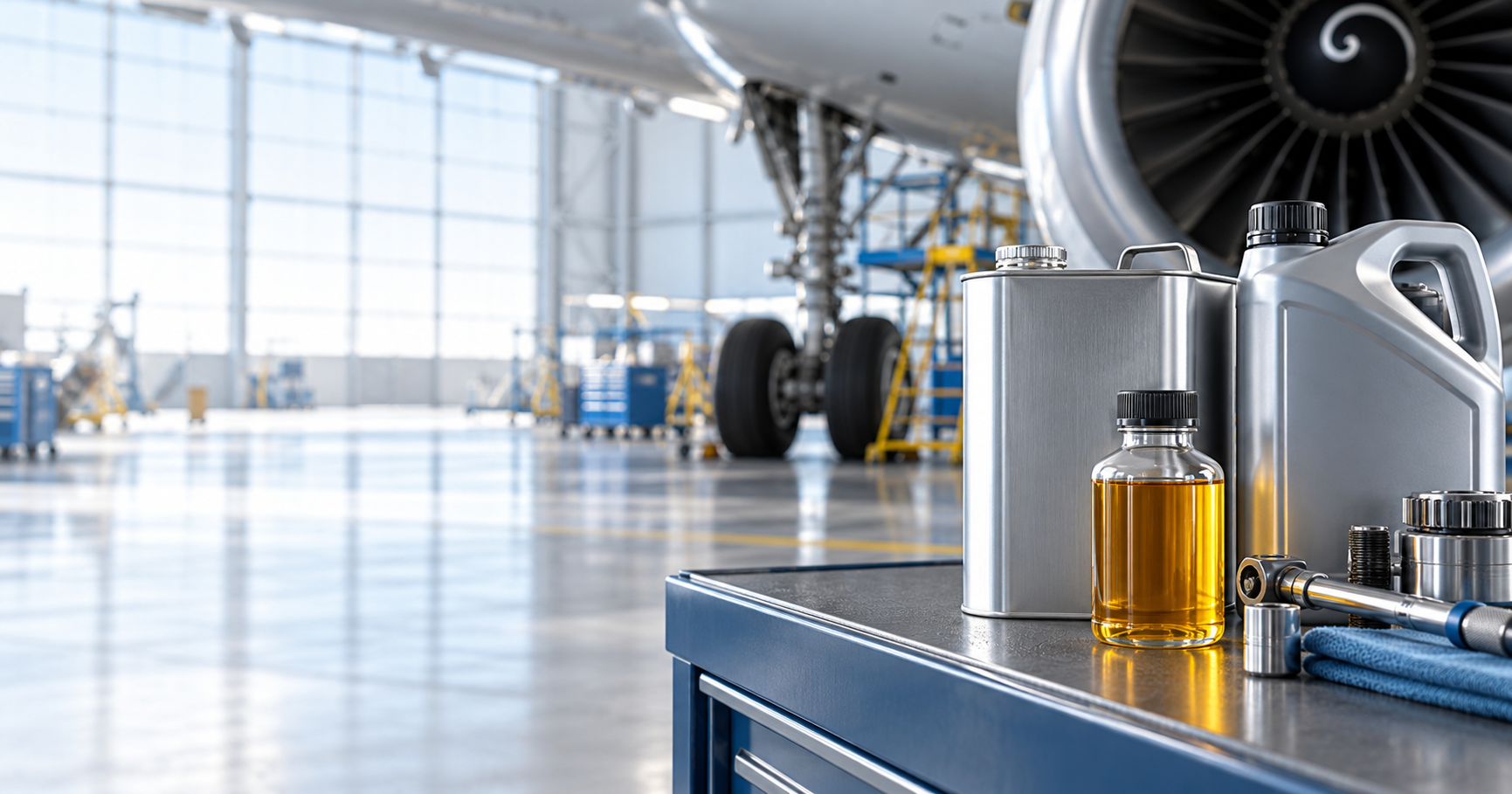
On the ground, a hydraulic oil or grease is usually chosen on viscosity and performance. In aviation, that is only the start. Engine and airframe manufacturers publish approved lubricant lists, and the maintenance manual for an aircraft names what can and can’t be used.
That changes how you buy. The question is less “what is a good oil for this?” and more “what does the manufacturer approve, and can I show that the product I’m using meets it?” Our aviation lubricants range is organised with that in mind, but the specification always comes from the aircraft or engine documentation, not from us or the supplier.
Piston-engine aircraft use oils formulated differently from car or truck engine oils. They are built for air-cooled engines that run hot, at high load and often with long gaps between flights, which is hard on both oil and engine.
There are two main types to know about:
Grades are given as SAE numbers, with multigrade oils such as 20W-50 widely used across a range of operating temperatures. Which grade is correct depends on the engine and the climate, so follow the engine manufacturer’s guidance rather than defaulting to whatever was used last.
Gas turbines run hotter and faster than piston engines, and they use fully synthetic oils, usually ester-based. These are specified to recognised standards, with MIL-PRF-23699 a common example for turbine engine oils.
Within that family there are differences in thermal stability and deposit control, and manufacturers specify which grade or performance level their engine needs. A higher-performance turbine oil isn’t automatically acceptable in an engine approved only for a standard one, so check the approval rather than assuming an upgrade is allowed.
Turbine oils from different suppliers shouldn’t be mixed unless the engine manufacturer permits it. Mixing can change seal compatibility and performance in ways that aren’t obvious until something goes wrong.
Hydraulic fluids move power around the aircraft, operating flight controls, landing gear and brakes. Three families are in common use, and they are not interchangeable:
The seals and hoses in a hydraulic system are chosen for one fluid family. Introducing the wrong one can damage them, which is why the fluid type is fixed by the aircraft design and not left to preference.
Aircraft use grease in landing gear, control linkages, wheel bearings and many other moving parts. These applications cover a very wide temperature range, from cold soak at altitude to heat near brakes and engines, and they have to resist water and vibration.
General-purpose airframe greases and wide-temperature greases are both common, specified under standards such as MIL-PRF-23827 and MIL-PRF-81322. Different greases shouldn’t be mixed in the same joint unless they are confirmed compatible, since a change of thickener can soften or break down the grease and let it escape. Our aviation greases category covers the options, and the same rule applies: match the approval, then the grade.
Aviation purchasing has a few steps that ordinary lubricant buying doesn’t, and it’s worth having these ready before you place an order:
Traceability matters more here than in most sectors. Keeping the paperwork for the product that went into an aircraft is part of normal practice, so it helps to buy from a supplier who can provide it.
Choosing an aviation lubricant follows the same logic as any other, with the manufacturer’s approval carrying far more weight than usual. Our guide on how to choose the right lubricant for your equipment covers the general process, and different types of lubricants and their uses explains how oils, greases and hydraulic fluids differ.
If you’re unsure which aviation oil, hydraulic fluid or grease meets your requirements, our team can help. Contact Velocity Edge and a knowledgeable member of our team can assist you in finding the correct product for your application.