
The problem is that “equivalent” is one of the most misused words in lubrication. Two products can carry the same headline viscosity number and still behave completely differently in your equipment.
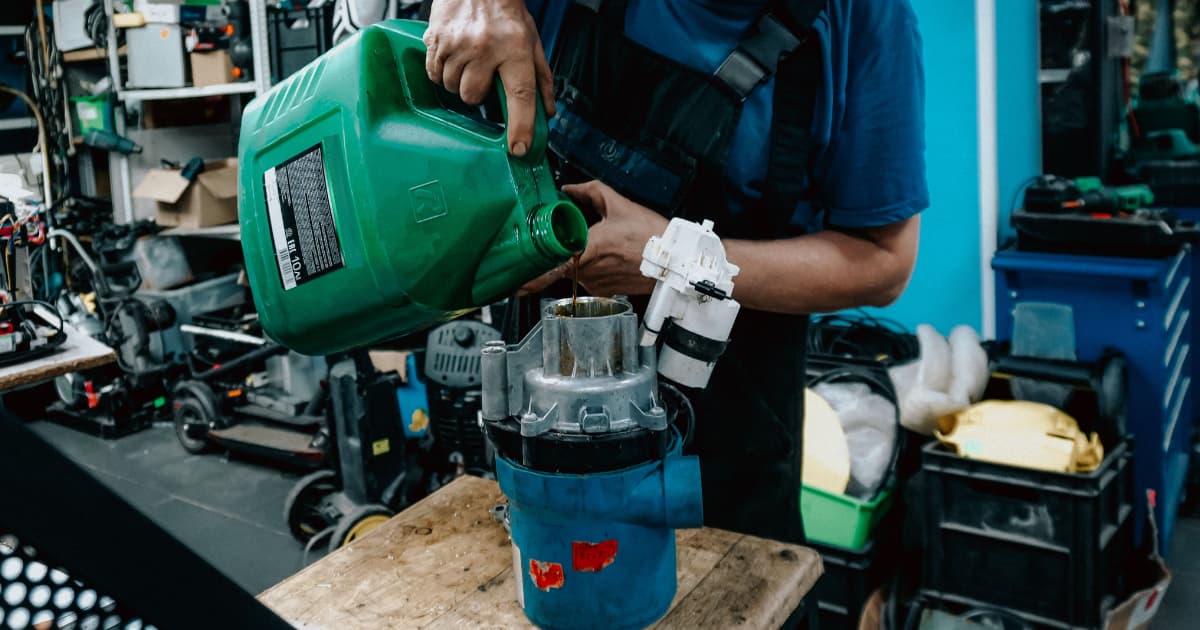
This guide explains what a genuine equivalent lubricant is, the five properties that actually need to match, the mistake that catches most buyers out, and a simple process for finding a replacement you can trust. It also covers how a proper lubricant cross reference works, so you can switch products without voiding a warranty or shortening equipment life.
There are usually four reasons a buyer goes looking for an equivalent.
Whatever the reason, the goal is the same. You want a different product that does the same job, safely, without compromising performance or cover.
An equivalent is not a product with a similar name or the same viscosity number. It is a product that matches on the properties that determine how the lubricant performs in your application. A real equivalent lubricant matches on five things.
This is the starting point, not the finish line. For industrial oils this is the ISO VG number. For engine and gear oils it is the SAE grade. The grade has to match, because viscosity is what keeps surfaces separated under load. Viscosity index also matters where operating temperatures swing widely, as it tells you how stable that grade stays as the oil heats and cools.
Mineral, synthetic, PAO, or PAG. This matters more than most people expect. A polyglycol (PAG) oil, for example, is often not compatible with mineral or PAO oils at all, so swapping one for the other without a full flush can cause real problems. Base oil type also affects temperature performance, oxidation resistance, and service life.
This is where the real comparison happens. Industrial lubricants are defined by standards such as DIN 51524 for hydraulic oils, the ISO 6743 family across applications, and AGMA classifications for gear oils. These tell you the performance level: anti-wear versus rust and oxidation (R&O), extreme pressure (EP) capability, and so on. If your current oil meets a particular standard, the equivalent needs to meet the same one.
Many equipment makers publish named approvals, and some warranties depend on using an approved product. This is the single most important point to get right, and it is covered in more detail below.
For greases this means the NLGI grade, the thickener type, the dropping point, and the base oil viscosity. For hydraulic oils it might mean zinc-free chemistry for certain pumps. For compressor and turbine oils it might mean specific air-release or demulsibility figures. These details are the difference between a product that works and one that only looks right on paper.
The biggest error is matching on the viscosity number alone. Picture three different oils, all ISO VG 46:
Turbine Oil
Anti-wear Hydraulic Oil
Compressor Oil
All three share a viscosity grade but almost nothing else. Their additive packages, base oils, and intended applications are entirely different. Drop the wrong one into a hydraulic system and you can get poor wear protection, foaming, or filter problems, even though the number on the label looked correct.
The number tells you the thickness of the oil. It tells you nothing about what the oil is for.
This distinction matters, especially while equipment is under warranty.
A product can be technically equivalent to your current lubricant, meeting the same specifications and performing to the same level, without carrying the equipment maker’s formal approval. Formal approval means the manufacturer has tested and listed that specific product. An equivalent that lacks the named approval may perform identically, but if your warranty requires an approved product, using it could affect your cover.
So before you switch, decide which approvals are genuinely warranty-critical and which are simply nice to have. For older or out-of-warranty equipment, a technical equivalent is usually fine. For new machinery under warranty, check the named approval before you commit.
A cross reference looks slightly different depending on the product family. Here is what tends to matter most in each.
Match the ISO VG grade, the DIN 51524 part (HL, HLP, or HVLP), and the additive chemistry. Zinc-free and ashless options exist for pumps that demand them, so confirm whether your current oil uses one. Browse our hydraulic oils range to compare grades and specifications.
Match the ISO VG or SAE grade, the AGMA classification, and the EP additive level. Industrial gear oils and automotive gear oils are not interchangeable, so keep the application clear. See our industrial gear oils for like-for-like options.
Match the NLGI grade, the thickener type (lithium, lithium complex, calcium sulfonate, polyurea), the base oil viscosity, and the dropping point. A grease is the product family where mismatches cause the most field problems, because incompatible thickeners can soften or harden a mix. Our industrial greases listings show thickener type and NLGI grade up front.
Match the grade, the base oil type, and the key cleanliness and separation properties such as oxidation life, demulsibility, and air release. Explore compressor oils and turbine oils when replacing these.
In food and beverage plants the equivalent must also carry NSF H1 registration. Performance alone is not enough if the registration is missing. Our guide to food-grade (H1) lubricants explains what to check, and you can shop the food-grade lubricant range directly.
Follow these steps and you will avoid almost every common mistake.
Working through all of this on your own takes time, and getting it wrong is costly. This is where our team can save you the effort.
Tell us the product you currently use and the equipment it runs in, and we will identify suitable alternatives matched on the properties that matter: viscosity grade, base oil, specifications, and approvals. We work from the technical data, not marketing claims, and if a switch is warranty-critical we will confirm the approvals before you commit to anything.
Looking for an alternative to a product you already use? Email our team at sales@velocity-edge.com with the details and we will help you find the right match. You can also browse the full lubricant range to compare specifications yourself.
An equivalent lubricant is a product that matches your current one on the properties that drive performance: viscosity grade, base oil type, performance specifications, OEM approvals, and any application-specific properties. A matching viscosity number on its own does not make a product equivalent.
No. An equivalent meets the same specifications and performs to the same level. An approved product has been formally tested and listed by the equipment maker. A product can be equivalent without carrying the named approval, which matters when a warranty requires an approved lubricant.
Only if they are confirmed compatible. Even products with the same viscosity grade can use different base oils or additive systems that do not mix well. If you are topping up rather than draining and flushing, confirm compatibility first to avoid sludge or separation.
Start from the technical data sheet, list your non-negotiables, then compare TDS to TDS property by property. For a faster answer, send your current product and the equipment it runs in to a supplier who can cross reference it against the specifications and approvals.
It can, if your warranty requires a named, approved product and the equivalent does not carry that approval. For out-of-warranty or older equipment, a technical equivalent is usually fine. For new machinery under warranty, check the approval before switching.
It is a table that maps one manufacturer’s product to comparable products from others, usually by viscosity grade and application. It is a useful starting point, but it should never replace a side-by-side TDS comparison, because charts rarely capture approvals and additive detail.