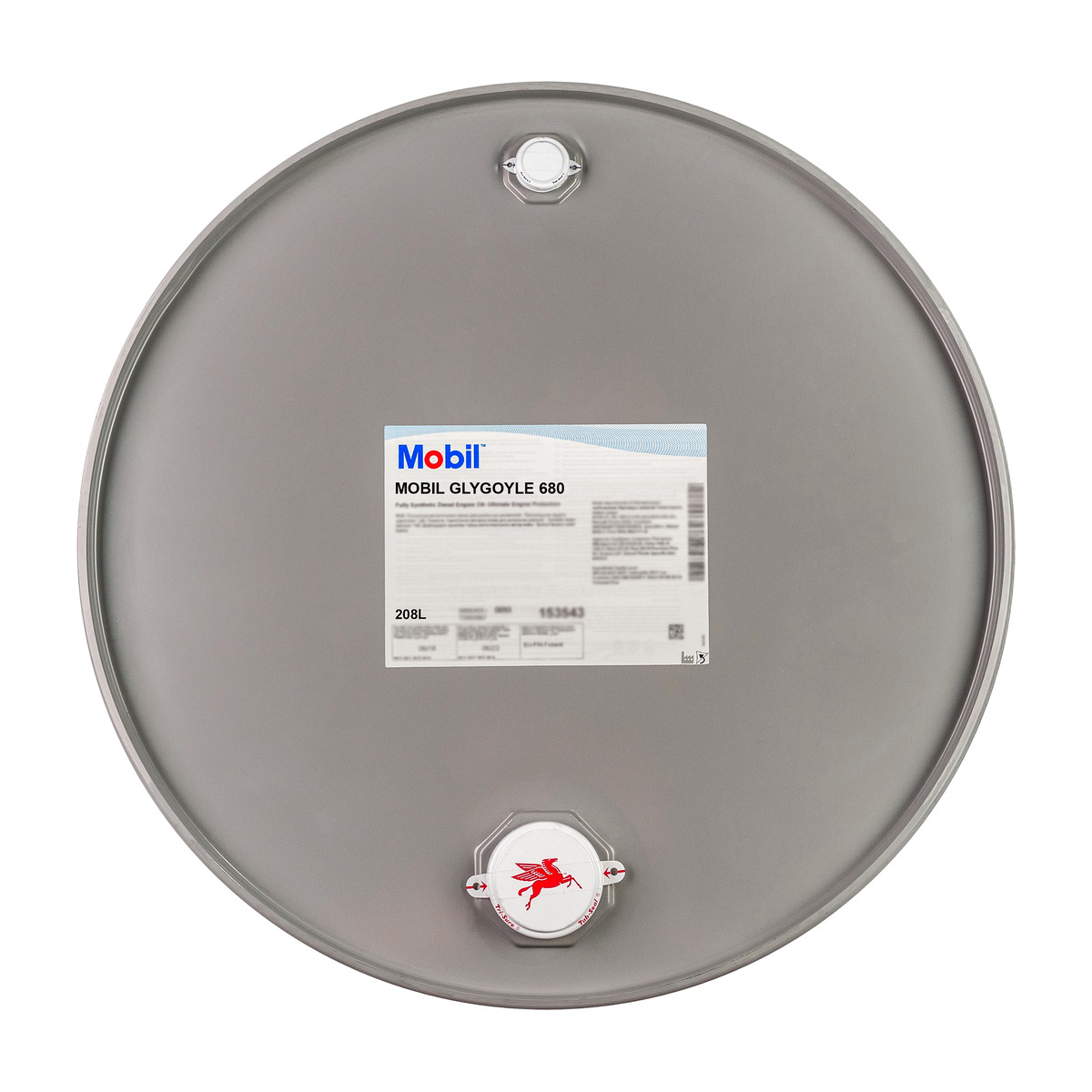

Mobil Glygoyle 680
Mobil Glygoyle 680 is a high-performance fully synthetic lubricant formulated using advanced polyalkylene glycol (PAG) technology. It is engineered for use in gears, bearings and compressors operating under severe conditions where superior efficiency, durability and reliability are essential.
One of the key advantages of Mobil Glygoyle 680 is its excellent efficiency performance. The low traction characteristics of PAG base oils help reduce friction, resulting in improved gear efficiency, lower energy consumption and reduced operating temperatures. This contributes to longer equipment life and reduces operating costs.
Mobil Glygoyle 680 also provides outstanding wear and micropitting protection. The formulation delivers strong EP and anti-wear performance, helping protect gears and bearings under heavy loads and severe operating conditions. This enhances reliability and reduces maintenance requirements.
Another important benefit is its excellent thermal and oxidation stability. The oil resists degradation and deposit formation at elevated temperatures, helping maintain system cleanliness and extend lubricant service life.
Mobil Glygoyle 680 also offers very good corrosion and rust protection along with excellent foam control. Its high viscosity index and low pour point support reliable performance across a wide operating temperature range, ensuring smooth start-up and consistent lubrication.
Mobil Glygoyle 680 is recommended for use in worm gear applications, industrial gearing, bearings and gas compressors, particularly in severe service environments such as cement, metalworking, plastics, food processing and textile industries. It is also suitable for filled-for-life gearboxes and applications requiring high efficiency and long lubricant life.
Physical characteristics include a kinematic viscosity of approximately 680 mm²/s at 40°C and 112 mm²/s at 100°C, with a viscosity index of around 265. Mobil Glygoyle 680 has a density of approximately 1.076 g/cm³ at 15.6°C, a flash point of approximately 265°C and a pour point of approximately −33°C, supporting reliable performance across a wide range of operating conditions.